As soon as the temperatures rise, it starts again: the Tick season. They are also available during the cold months, just not as many. These tiny arachnids lurk in greenery and can transmit diseases to both humans and animals. But with the right knowledge - and the right tools - you are well prepared.
👉Buy TickSnare now
What are ticks?
Ticks belong to the class of arachnids. The common wood tick is particularly widespread here. This species is responsible for most tick bites in humans and animals.
They prefer to live in:
- tall grass
- Bushes
- Forest edges
- Parks and gardens
Contrary to a common myth, ticks do not fall from trees - they usually sit in low vegetation and can be brushed off as you walk past.
Why quick removal is so important
Ticks can transmit pathogens, including:
- TBE (tick-borne encephalitis) - a viral disease
- Lyme disease - a bacterial disease
Ticks transmit diseases through their saliva. This enters our bloodstream after they bite or sting us. Ticks release their saliva into our bloodstream before and during bloodsucking. They do this to prevent premature coagulation (clotting) of the blood and to get rid of excess fluid. This can lead not only to the transmission of diseases but also to inflammation in the host's body (humans and animals).
Hence the statement: the longer a tick sucks, the higher the risk of transmission (especially in the case of Lyme disease).
Therefore, remove ticks as early and correctly as possible.
Removing ticks correctly - why the tick snare is ideal
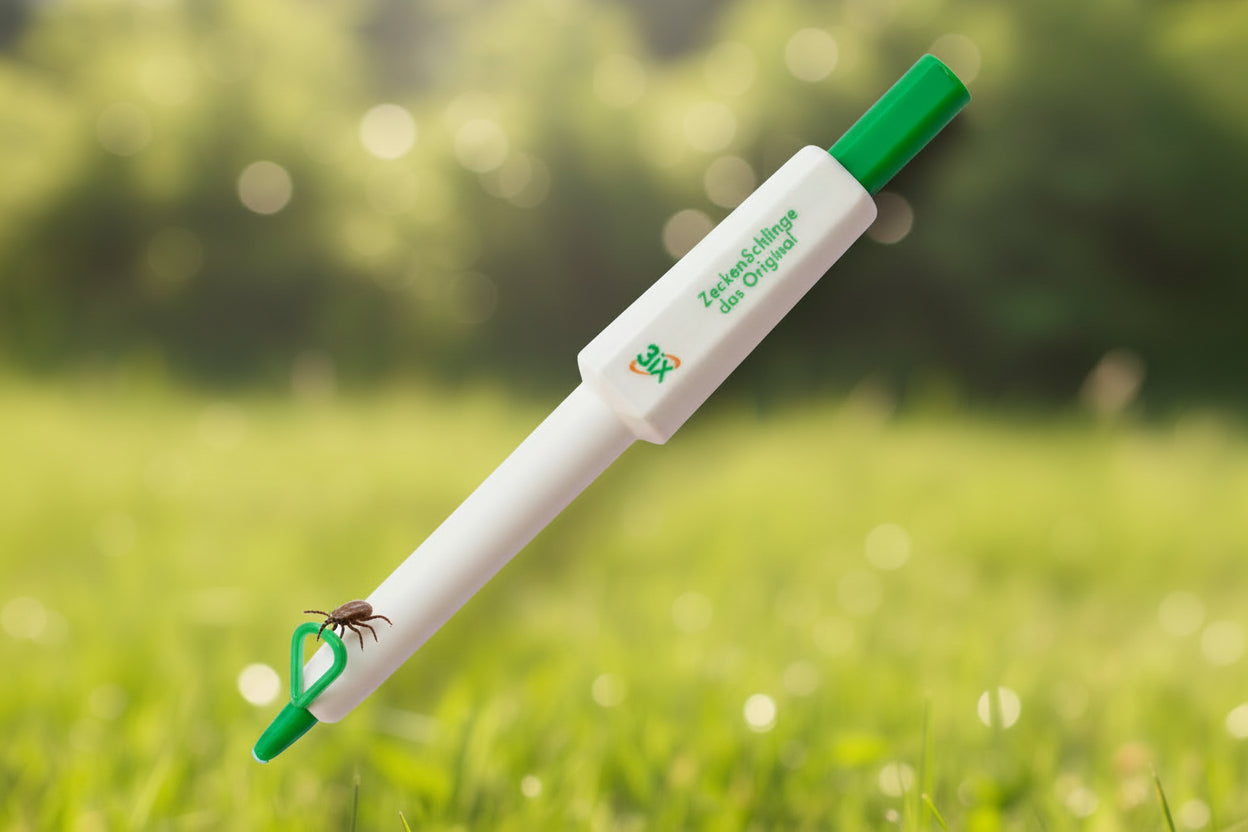
Many people use tweezers or tick cards. However, the so-called TickSnare (also called tick lasso).
Advantages of the TickSnare
✔ Grips the tick close up without squeezing it
✔ Particularly suitable for hard-to-reach areas
✔ Easy to use
✔ Can also be used for small ticks
✔ Easy and safe to use on animals, even dogs with curly coats
Gentle removal with a snare is often more comfortable, especially for children or sensitive skin.
Step-by-step instructions with the TickSnare
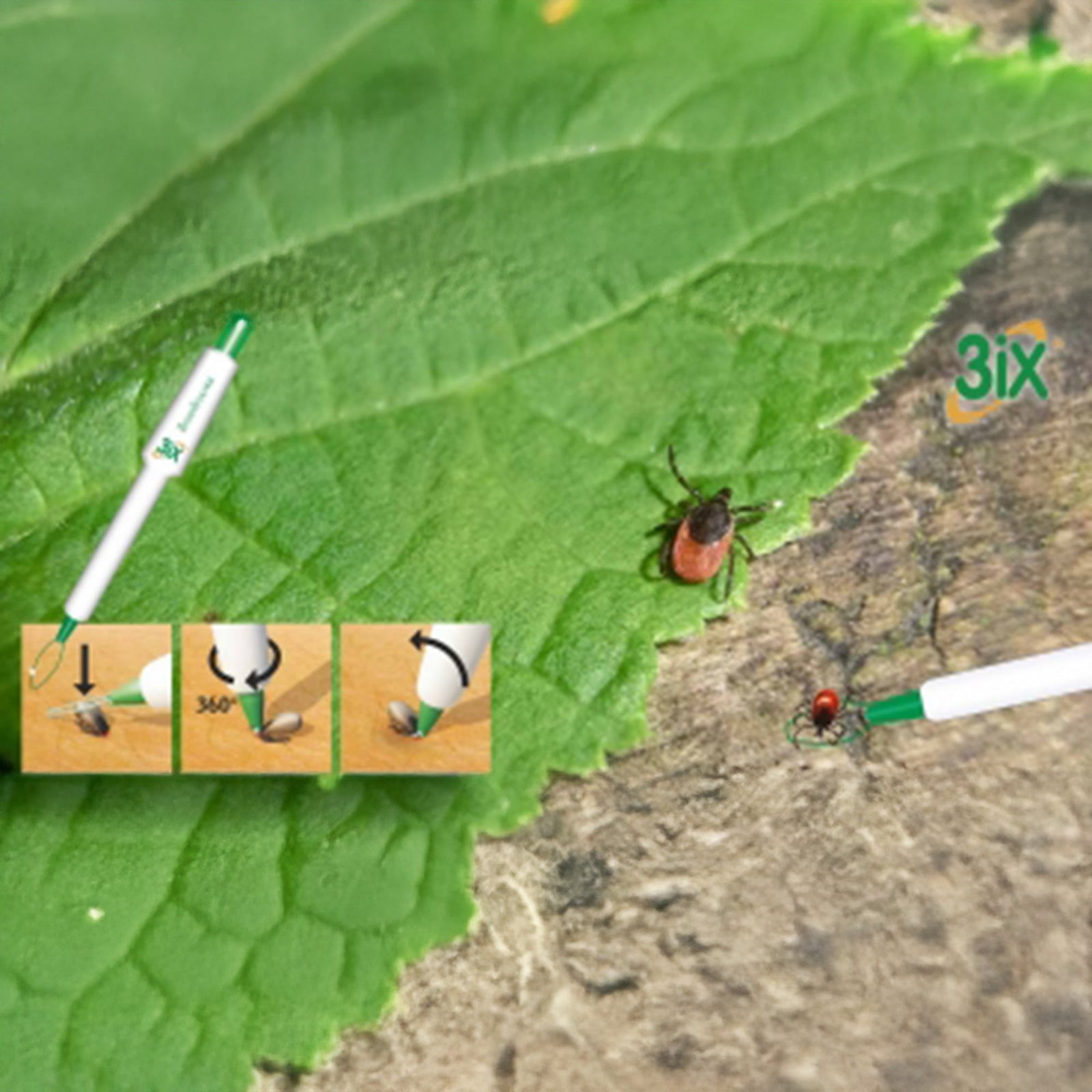
1. press the button at the back, the small loop snaps out at the front
2. Hold down the button and place the loop over the tick - without pinching!
3. slowly release the button, the loop wraps around the tick's proboscis.
4. Turn slightly and lift, the tick is removed
5. disinfect the puncture site
6. observe the following weeks
Important: Do not pull abruptly and do not use household products such as oil or glue. These can cause the tick to release saliva - and thus possibly transmit pathogens.
Why a TickSnare belongs in every household
A tick loop is:
- Small and handy
- Ideal for on the go (hiking, camping, gardening)
- Suitable for people and pets
Especially in tick-rich regions, it is a useful and inexpensive tool that should be quickly to hand in an emergency.
Conclusion
Ticks are a natural part of our environment - but their bites should be taken seriously. With suitable protective clothing, regular checks after spending time outdoors and a TickSnare you are well prepared for safe removal.
So you can enjoy nature - and still stay on the safe side. 🌿

 from
CHF 19.00
from
CHF 19.00 from
CHF 23.00
from
CHF 23.00
 CHF 25.60
 from
CHF 6.70
from
CHF 6.70