















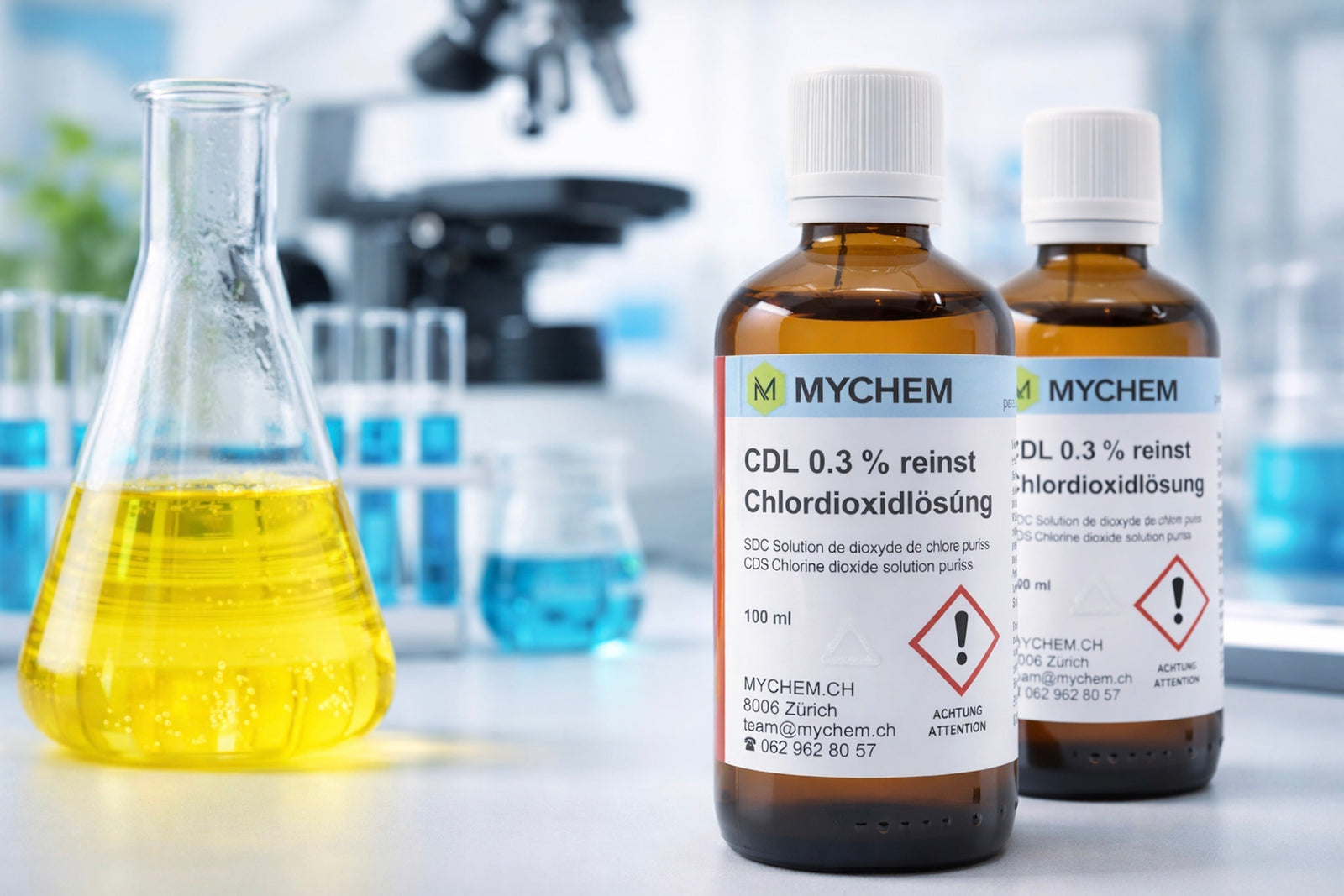

Quality and purity are key terms when it comes to chemicals - but what exactly do they mean?
👉 In this article you will learn:
- what quality means for chemicals
- How purity is defined
- Why manufacturing processes are crucial
- What you should look out for when choosing
We encounter chemicals in the laboratory, in everyday life and in technical applications. It is crucial to understand their properties correctly and classify them objectively.
What does quality mean for chemicals?
Quality describes how cleanly, controlled and traceable a product has been manufactured.
It influences, among other things:
- the composition
- the stability
- the purity
- the reproducibility
High-quality chemicals are characterized by clear specifications and controlled manufacturing processes.
What is purity?
Purity describes the proportion of the desired substance in relation to possible foreign substances or secondary constituents.
The higher the purity, the lower the proportion of undesirable accompanying substances.
Why purity is important
- Better control of properties
- Fewer undesirable side reactions
- clearer composition
- Better stability
- Higher comparability
Different quality levels
Chemicals are offered in various purity and quality levels - from technical quality to high-purity variants.
Typical designations are, for example:
- Technical quality
- pure
- puriss
- Ph. Eur.
- USP
Why the manufacturing process is crucial
Not only the raw materials, but also the production process has a significant impact on quality.
Important factors are:
- Process control
- Water quality
- Suitable materials
- Avoidance of side reactions
Example: Chlorine dioxide solution (CDS)
Also with CDS purity and manufacturing processes play a central role.
Differences can be seen, among other things, in
- Concentration
- pH value
- Conductivity
- Stability
Why labeling is important
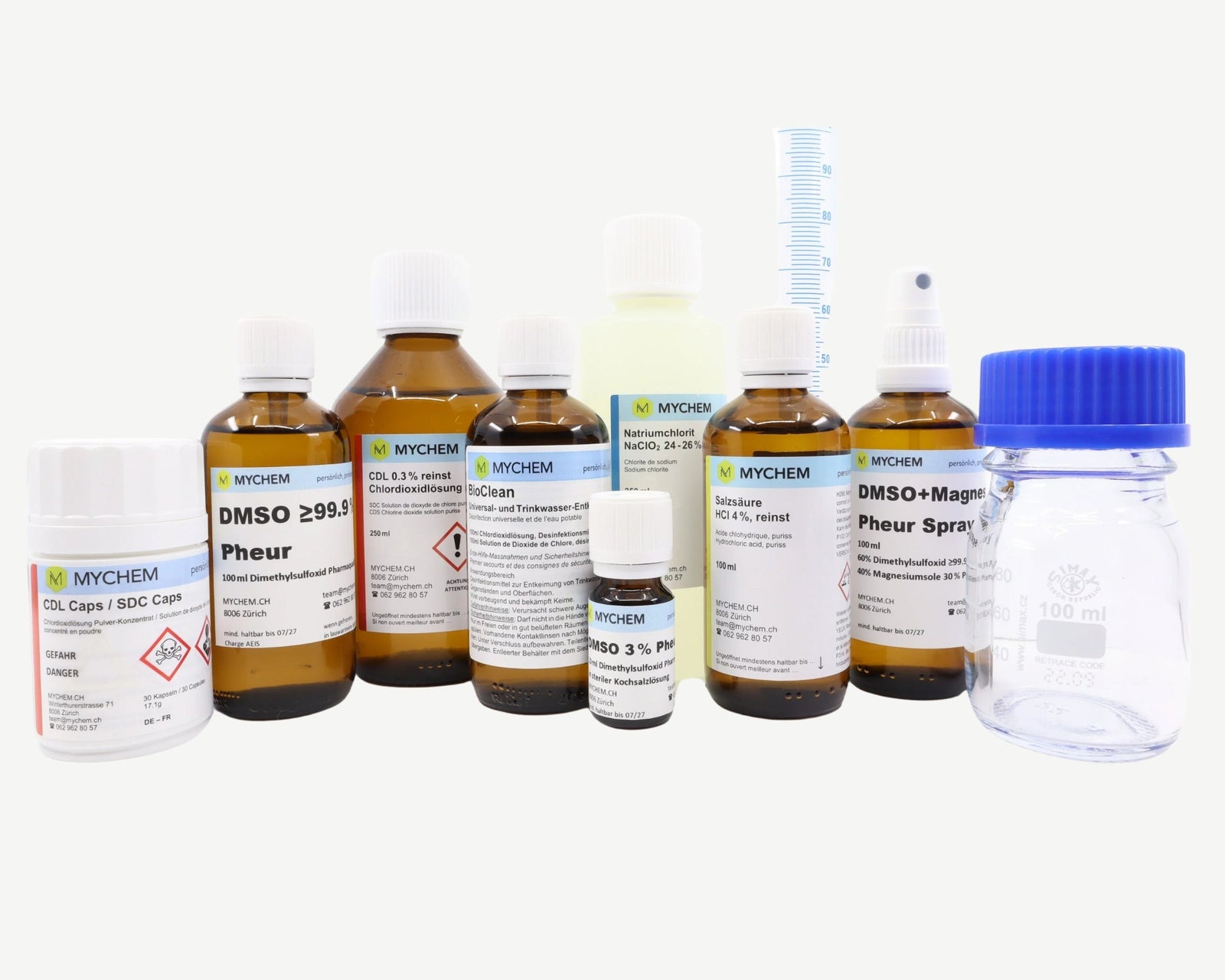
Clear labeling helps to classify chemical products correctly.
These include, for example:
- Concentration data
- Hazard warnings
- Manufacturer information
- Batch information
Safe application
The safe handling of chemicals is based on:
- clear information
- correct storage
- proper use
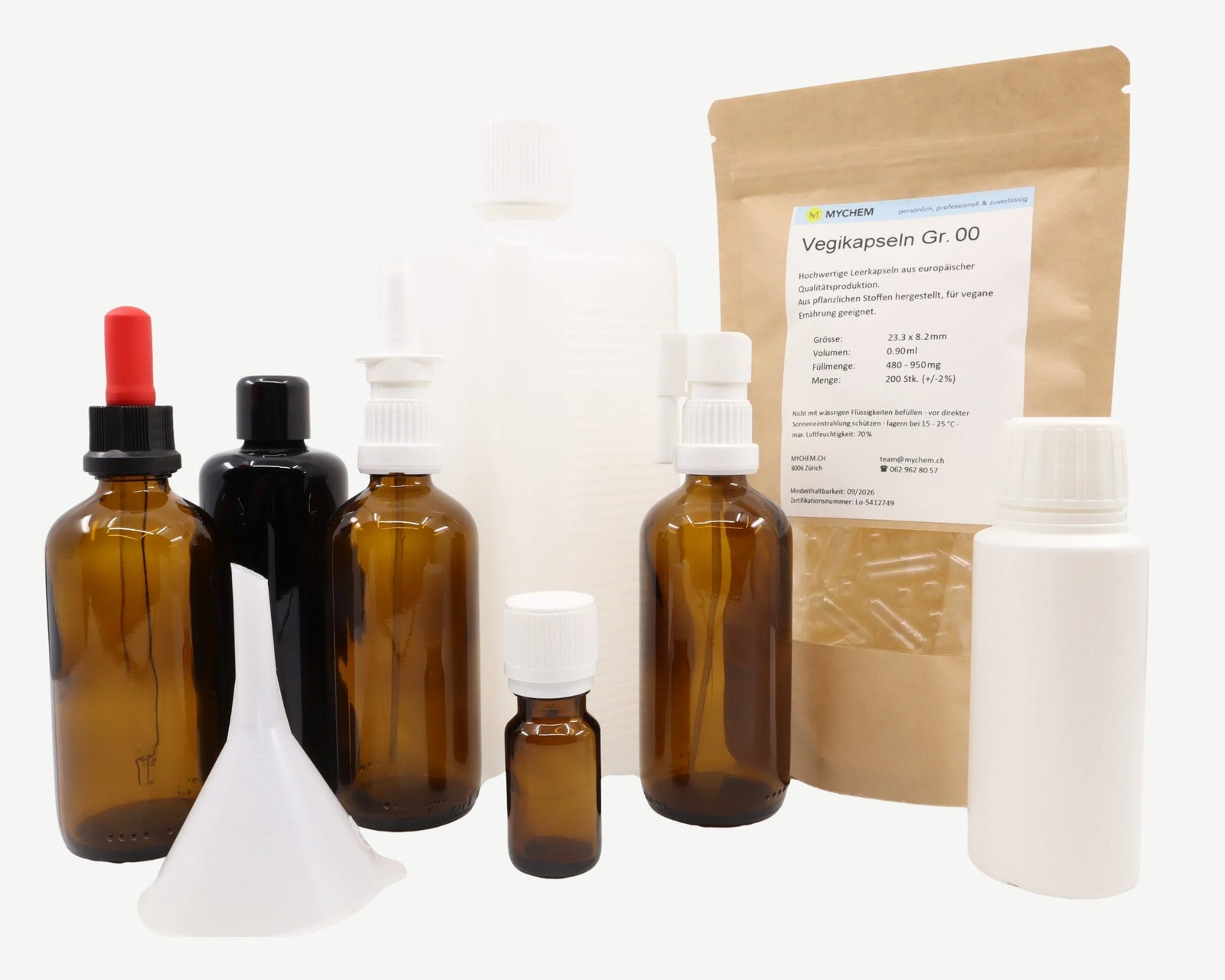
- suitable packaging
It is important to classify products objectively and to observe safety information.
Chemicals in everyday life
Many chemical products are used in everyday life, in the laboratory or in technical areas.
It is crucial to understand their properties correctly and handle them responsibly.
Conclusion
Quality and purity are crucial for trust, traceability and safe use.
Those who pay attention to clear information, controlled production and comprehensible properties can judge chemical products much better.
💧 CDS 3000 ppm - discover tested Swiss quality
👉 Further basics: CDS Knowledge at a glance
Matching products for this topic
💧 CDS 3000 ppm - tested Swiss quality
Defined concentration, controlled production and high purity.
👉 CDS View🧪 DMSO - high purity up to Ph. Eur.
Available in various concentrations - for laboratory and technical applications.
👉 View DMSO🔵 Methylene blue 1 % - USP quality
High-purity solution with clearly defined concentration and controlled production.
👉 View methylene blue


